Early Detection Saves Lives!
Breast Cancer Awareness Corner

Breast Cancer Awareness

  • Choosing Your Doctor

    Finding the right team, one that consists of professionals with whom you are comfortable, makes a big difference in how your treatment will progress. Your physicians should be knowledgeable, of course, but they should also welcome questions and be able to explain your treatment options to you in a way you can understand.

  • Standard Treatment vs. Clinical Trials

    Before selecting your treatment plan, you should first understand the difference between standard treatment and clinical trials. Breast cancer standard treatments are methods that experts agree are appropriate, accepted, and widely used. These standard procedures have proven useful in fighting breast cancer in the past. A breast cancer clinical trial, on the other hand, is an approved.

  • Metastatic Breast Cancer Trial Search

    Find metastatic breast cancer trials that are right for you. Simply provide your breast cancer type, sites with current evidence of disease, gender, birth year, and zip code to get started.

  • Chemotherapy

    Chemotherapy is a treatment method that uses a combination of drugs to either destroy cancer cells or slow down the growth of cancer cells.

  • Radiation Therapy

    Radiation therapy (also called radiotherapy) uses high-energy rays to kill cancer cells. It affects cells only in the part of the body that is treated with the radiation. Breast cancer radiation therapy may be used to destroy any remaining mutated cells that remain in the breast or armpit area after surgery.


Success Stories

Get Awareness About Cancer

What can I do to reduce my risk of breast cancer?.
Get Your Self Ready

Control your weight.
Being overweight or obese increases the risk of breast cancer.

Be physically active
Physical activity can help you maintain a healthy weight, which helps prevent breast cancer.

Breast-feed

Breast-feeding might play a role in breast cancer prevention.

Checkout Our Latest Events

Our Team

Dr. Saima Hamid

Vice Chancellor

Prof. Dr. Azra Yasmin

Chairperson

Dr. Huma Jahangir

Senior Medical Officer

Dr. Nosheen Masood

Asst. Prof. Biotechnology
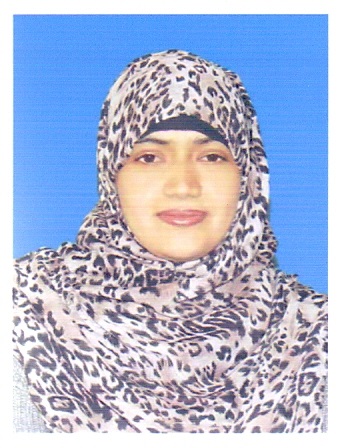
Dr. Nargis Bibi

Asst. Prof. CompSci

Most Frequent Questions and Answers

Breast cancer is a type of cancer that forms within breast tissues. It occurs in both men and women, though it is extremely rare among men. Following skin cancer, breast cancer is the most common type of cancer among women in the United States today. According to the National Cancer Institute, more than 268,600 women and more than 2,600 men are diagnosed with this disease each year.

Breast cancer primarily affects females, however approximately 1 percent of all breast cancer cases occur in men. Any woman is at risk, and her risk of getting breast cancer increases with age.

Being female - regardless of age or ethnicity - is the number one risk factor for breast cancer. Aside from gender, there are other factors that may further any woman’s chance of getting breast cancer.

  • A lump, hard knot or thickening in the breast
  • A lump in the underarm area
  • Change in the size or shape of a breast
  • Nipple pain, tenderness or discharge, including bleeding
  • Itchiness, scales, soreness or rash on nipple
  • Nipple turning inward or inverted
  • Change in skin color and texture: dimpling, puckering or redness
  • Breast that feels warm or swollen

Certain risk factors, such as age and family history, cannot be controlled by the individual; therefore, early detection is the best weapon against breast cancer.

While you may have no control over your age or genetics, you do have control over your lifestyle. You are capable of reducing your risk for breast cancer by simply leading a healthy life.

Mammography is a special type of imaging that uses a safe, low-dose x-ray system to examine the breasts. Because this imaging is capable of showing changes in the breasts up to two years before a patient or physician can feel them, it plays a central role in the early detection and prevention of breast cancer.

Health care specialists rely on mammograms not only to detect early stages of breast cancer in women experiencing no signs of breast cancer, and also to detect and diagnose breast cancer in women experiencing symptoms such as lumps, pain and nipple discharge.

During a mammogram, pressure will be applied to the soft tissues until firmness of the breast is reached. This is necessary in order to obtain quality film. This pressure may cause several seconds of discomfort. If you experience any pain during your exam, it is alright for you to ask the mammographer to stop and try making adjustments. Just keep in mind that the applied pressure is important in acquiring a good image, and will only last about 30 seconds.

Contact us

Phone: + 92 051 9292900 (1141)
Email: bcac@fjwu.edu.pk
Medical Center, Fatima Jinnah women University, The Mall Rawalpindi
MON-FRI 08:00 AM - 4:00 PM